Thursday, December 13

Pomegranates


by Katherine Matutes, Ph.D.
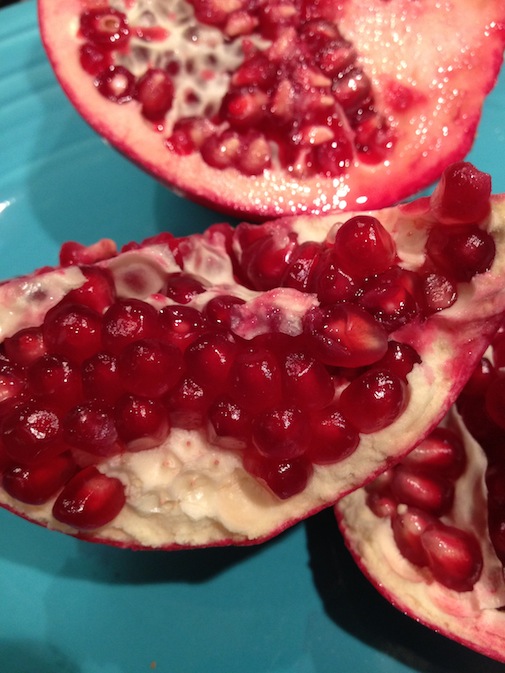
The late fall ushers in many unique produce flavors.

One of my favorites is pomegranates, which are believed to have originated in Persia (modern day Iran).

The name pomegranate is derived from Latin pōmum "apple" and grānātum "seeded", which is an apt description. Pomegranates have an apple like ordinary exterior that belies its interior filled with beautiful jewel-like seeds called avrils.

Pomegranate avrils are a good source of vitamin C, Pantothenic acid, potassium and many unique phenolic compounds. They are also an excellent source of fiber, providing up to 11 grams per pomegranate. Several preliminary studies indicate that these attributes may help reduce cardiovascular disease risk.

Aside from their health benefits, pomegranates are delicious and have wonderfully diverse culinary uses. They are great in salsas, soups, pasta, as a salsa and just plain, right out of the fruit.

The dark juice stains readily so be sure to wear an apron when preparing one. Cut the pomegranate into quarters and turn the peel inside out as you gently coax out the avrils. Avrils are easiest to remove from the membrane in a bowl of water. The avrils will sink while the undesirable membrane will float to the surface, making it easier to separate them.

Pomegranate season is typically October through January, so hurry to give them a try before they disappear from the produce aisle.


More About Katherine Matutes, PhD

Tuesday, December 11

Holiday Gifts that Grow in the Backyard


by Richard Kordesh

Like my Slovenian ancestors, I find growing pole beans to be fascinating.  

White seeds sprout into plantlets that then extend little tendrils grasping for something firm to clutch. I place a pole within reach of those slender green arms, and then the climbing begins. By the time the stalks are fully extended, I need a stepladder to reach the uppermost beans!

Some we eat fresh and some we freeze. Family and friends who’d been viewing or helping in the garden experience this progression from seed to tendril to upward growth to dinner. 

To partake of the garden’s gifts assumes a special significance during the holiday season. Even with the plants now settled into the compost heap, and with the ground hardening out back, the garden’s bounty keeps appearing. One tender bite opens nuanced memories from having nurtured these plants from June through September.

Some beans are fatter, because I didn’t see them when they were primed for picking, obscured as they were underneath a dense cover of leaves. 

Those that grew later in the summer tended to grow more unevenly; pudgy in the middle and skinny toward the tips. You tolerate, and even enjoy, this kind of diversity in the backyard garden.

During the growing season, children watch with amazement as these plants take on the heights and thickness that might make them ready for Jack to ascend. Whether in the Julian Alps or the Midwestern plains, it’s not hard to get little ones to eat vegetables when they participate in the story that unfolds in their yard every summer.


Guest blogger Richard S. Kordesh is the author of Restoring Power to Parents and Places and has worked professionally in the community development field for 35 years. Visit Richard's website for more